


In the realm of metallurgy and powder metallurgy, reduced iron powder stands as a cornerstone material with a wide array of applications. As a trusted Reduced Iron Powder supplier, I've witnessed firsthand the critical role that the reduction degree plays in determining the quality of this essential product. In this blog post, I'll delve into the intricate relationship between reduction degree and the quality of reduced iron powder, exploring how different reduction levels impact various properties and applications.
Understanding Reduced Iron Powder
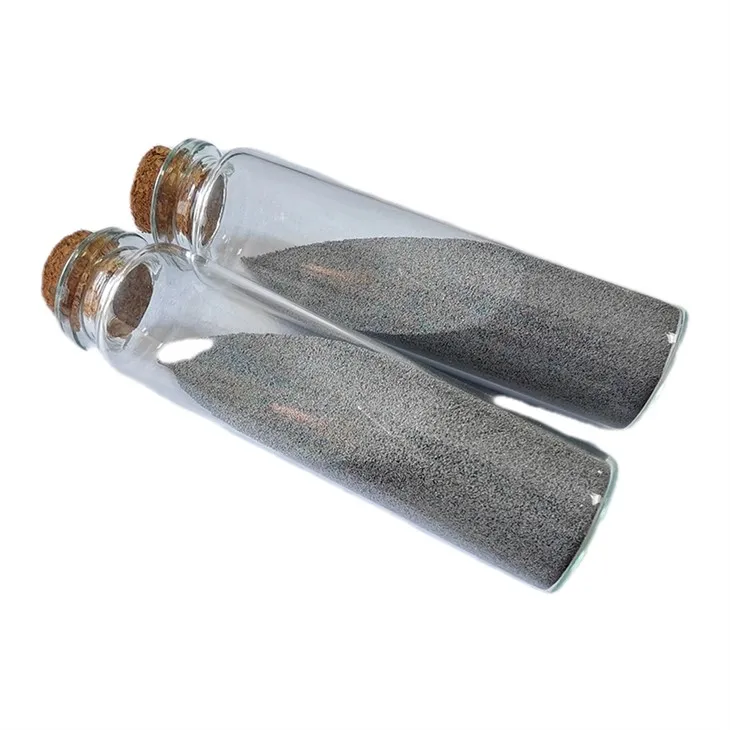
Before we explore the influence of reduction degree, let's briefly understand what reduced iron powder is. Reduced iron powder is produced by reducing iron oxides, typically hematite or magnetite, with a reducing agent such as carbon monoxide or hydrogen. This reduction process removes oxygen from the iron oxides, resulting in a powder composed primarily of metallic iron. The Reduced Iron Powder we supply is known for its high purity and excellent physical properties, making it suitable for a diverse range of industries, including automotive, electronics, and chemical manufacturing.
The Concept of Reduction Degree
The reduction degree refers to the extent to which iron oxides are converted into metallic iron during the reduction process. It is usually expressed as a percentage, representing the ratio of the actual amount of reduced iron to the theoretical maximum amount of iron that could be obtained from the starting iron oxide material. A higher reduction degree indicates a more complete conversion of iron oxides to metallic iron, resulting in a purer and more desirable product.
Impact of Reduction Degree on Chemical Composition
One of the most significant ways in which the reduction degree affects the quality of reduced iron powder is through its impact on chemical composition. As the reduction degree increases, the amount of residual oxygen and other impurities in the powder decreases. This is because the reduction process not only removes oxygen from the iron oxides but also helps to eliminate other non - metallic elements such as sulfur, phosphorus, and silicon.
For example, in low - reduction - degree powders, there may be a significant amount of unreacted iron oxides remaining. These oxides can affect the powder's reactivity and performance in subsequent processing steps. In contrast, high - reduction - degree powders have a lower oxygen content, which makes them more stable and less prone to oxidation. This is particularly important in applications where the powder will be exposed to high temperatures or reactive environments, such as in the production of High Purity Iron Powder.
Influence on Physical Properties
The reduction degree also has a profound impact on the physical properties of reduced iron powder. One of the key physical properties affected is particle shape and size distribution. During the reduction process, the structure of the iron oxide particles changes as they are converted into metallic iron. A higher reduction degree often leads to more regular and well - defined particle shapes, as well as a narrower particle size distribution.
This is beneficial for several reasons. Firstly, powders with a narrow particle size distribution are easier to handle and process, as they flow more uniformly and pack more densely. Secondly, regular particle shapes can improve the mechanical properties of the final products made from the powder. For instance, in powder metallurgy applications, where the powder is compacted and sintered to form solid parts, powders with well - defined particles can result in parts with higher density and better mechanical strength.
Another physical property affected by the reduction degree is porosity. Lower - reduction - degree powders tend to have higher porosity, as the unreacted iron oxides and other impurities can create voids within the powder particles. High - porosity powders may have lower bulk density and poor compressibility, which can make them less suitable for applications that require high - density compacts. On the other hand, high - reduction - degree powders have lower porosity, leading to higher bulk density and better compressibility, which is crucial for achieving high - quality sintered parts.
Effect on Magnetic Properties
Reduced iron powder is often used in applications that require specific magnetic properties, such as in the production of magnetic cores for electrical transformers and inductors. The reduction degree can significantly influence these magnetic properties.
In general, higher - reduction - degree powders have better magnetic performance. This is because the presence of unreacted iron oxides in low - reduction - degree powders can disrupt the magnetic domain structure of the iron particles, reducing their magnetic permeability and saturation magnetization. As the reduction degree increases, the amount of metallic iron in the powder increases, and the magnetic properties are enhanced. This makes high - reduction - degree reduced iron powder more suitable for high - performance magnetic applications.
Application - Specific Considerations
The impact of reduction degree on the quality of reduced iron powder varies depending on the specific application. For example, in the automotive industry, where reduced iron powder is used to manufacture engine components and other high - strength parts, a high reduction degree is often required to ensure the mechanical strength and durability of the final products. High - reduction - degree powders can be compacted and sintered to form parts with high density and excellent mechanical properties, which can withstand the high stresses and temperatures encountered in automotive applications.
In the electronics industry, the requirements for reduced iron powder may be different. For instance, in the production of Hydroxy Iron Powder, which is used in magnetic recording media and other electronic devices, a high reduction degree is necessary to achieve the desired magnetic properties. Additionally, the powder must have a high purity and a narrow particle size distribution to ensure uniform performance in electronic applications.
Controlling the Reduction Degree
As a Reduced Iron Powder supplier, we have developed advanced production processes to precisely control the reduction degree of our products. We carefully select the raw materials, control the reducing agent flow rate, temperature, and reaction time during the reduction process to ensure that the desired reduction degree is achieved.
By closely monitoring and controlling these parameters, we can produce reduced iron powder with consistent quality and tailored properties to meet the specific needs of our customers. Our quality control measures include regular chemical and physical analyses of the powder samples to verify the reduction degree and other quality indicators.

Conclusion
In conclusion, the reduction degree plays a crucial role in determining the quality of reduced iron powder. It affects the chemical composition, physical properties, magnetic properties, and application performance of the powder. As a Reduced Iron Powder supplier, we understand the importance of achieving the right reduction degree to meet the diverse needs of our customers.
Whether you are in the automotive, electronics, or any other industry that requires high - quality reduced iron powder, we can provide you with products that meet your specific requirements. Our commitment to quality, innovation, and customer satisfaction ensures that you will receive the best possible reduced iron powder for your applications.
If you are interested in learning more about our Reduced Iron Powder products or would like to discuss your specific needs, please feel free to reach out to us. We are always ready to engage in procurement discussions and help you find the perfect solution for your business.
References
- German, R. M. (1994). Powder Metallurgy Science. Metal Powder Industries Federation.
- Suri, P. S., & Upadhyaya, G. S. (2003). Iron Ore and Pelletization. Tata McGraw - Hill Education.
- Kaye, B. H. (1997). Particle Size Measurement. Chapman & Hall.


