


In the realm of modern industry, low carbon iron powder stands as a crucial material with diverse applications, ranging from powder metallurgy to magnetic materials. As a dedicated supplier of low carbon iron powder, I am constantly exploring ways to enhance its performance to meet the ever - evolving demands of our customers. In this blog, I will share some effective strategies and insights on how to improve the performance of low carbon iron powder.
1. Raw Material Selection and Quality Control
The journey to high - performance low carbon iron powder begins with the selection of high - quality raw materials. Iron ore is the primary source for producing iron powder. We need to carefully choose iron ore with high iron content and low impurity levels. The presence of impurities such as sulfur, phosphorus, and silicon can significantly affect the performance of the final iron powder. For example, sulfur can cause brittleness in the powder, while phosphorus can reduce its ductility.
We conduct strict quality control on the raw materials. Regular chemical analysis and physical property testing are carried out to ensure that the iron ore meets our standards. By using high - quality raw materials, we can lay a solid foundation for producing low carbon iron powder with excellent performance.
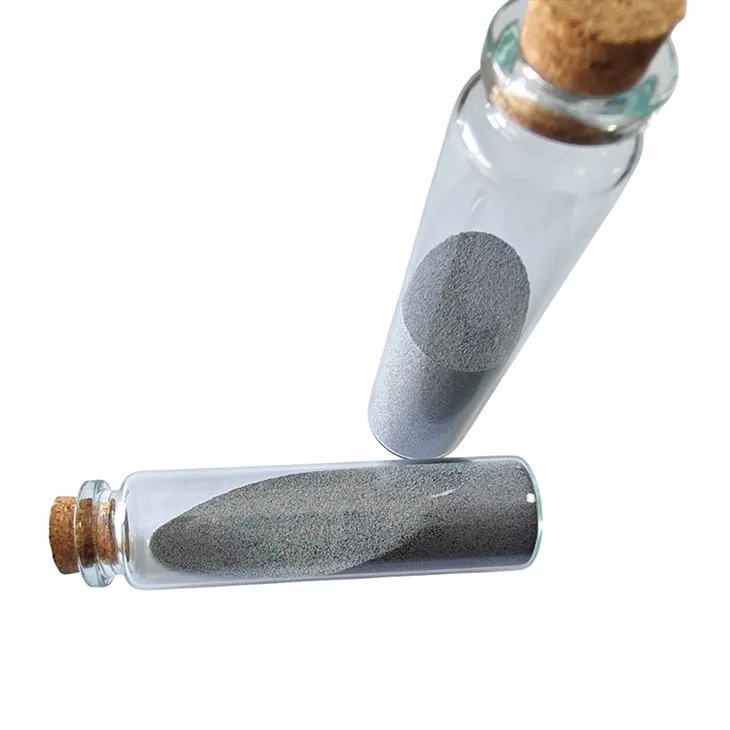

2. Advanced Production Processes
2.1 Reduction Process
The reduction process is a key step in the production of low carbon iron powder. There are several reduction methods available, such as the solid - state reduction and the gas - based reduction. Solid - state reduction typically uses carbonaceous materials as reducing agents, while gas - based reduction uses reducing gases like hydrogen or carbon monoxide.
Gas - based reduction has shown great potential in improving the performance of low carbon iron powder. Hydrogen, in particular, is a clean and efficient reducing agent. It can reduce iron oxides to iron at relatively low temperatures, resulting in a more uniform and fine - grained iron powder. The use of hydrogen also helps to reduce the carbon content in the iron powder, which is beneficial for applications where low carbon levels are required.
2.2 Atomization Process
Atomization is another important process for producing high - performance low carbon iron powder. In this process, molten iron is broken into small droplets by a high - pressure gas or water jet. The atomization process can produce iron powder with a narrow particle size distribution and a spherical shape.
Spherical iron powder has better flowability and compressibility, which are important properties for powder metallurgy applications. By optimizing the atomization parameters, such as the gas pressure, the flow rate of the molten iron, and the nozzle design, we can produce low carbon iron powder with excellent physical properties.
3. Particle Size and Shape Optimization
The particle size and shape of low carbon iron powder have a significant impact on its performance. Fine - grained iron powder generally has a larger specific surface area, which can improve its reactivity and sinterability. On the other hand, a narrow particle size distribution can ensure more uniform packing and better mechanical properties of the final product.
We can control the particle size and shape through various methods. For example, in the atomization process, adjusting the atomization parameters can change the particle size. Additionally, post - processing techniques such as sieving and classification can be used to obtain iron powder with a desired particle size range.
In terms of shape, as mentioned earlier, spherical particles are preferred for many applications. However, in some cases, irregularly shaped particles may be more suitable, depending on the specific requirements of the application. For instance, irregularly shaped particles can provide better interlocking in powder metallurgy parts, resulting in higher strength.
4. Surface Treatment
Surface treatment is an effective way to improve the performance of low carbon iron powder. One common surface treatment method is coating. Coating the iron powder particles with a thin layer of a protective material can prevent oxidation and improve the corrosion resistance of the powder.
For example, coating the iron powder with a layer of zinc or aluminum can form a sacrificial anode, which can protect the iron from corrosion. Another type of coating is the organic coating, which can improve the lubricity and flowability of the iron powder.
Surface activation is also an important surface treatment technique. By treating the iron powder surface with chemicals or plasma, we can increase its surface energy and reactivity. This can enhance the sinterability of the iron powder and improve the bonding strength between the particles during the powder metallurgy process.
5. Alloying and Additives
Alloying and the addition of additives can further enhance the performance of low carbon iron powder. Alloying elements such as nickel, chromium, and molybdenum can be added to the iron powder to improve its mechanical properties, such as strength, hardness, and toughness.
For example, adding nickel to the low carbon iron powder can increase its ductility and corrosion resistance. Chromium can improve the hardness and oxidation resistance of the powder. Molybdenum can enhance the strength and creep resistance of the powder.
In addition to alloying elements, additives such as lubricants and binders can also be added to the iron powder. Lubricants can reduce the friction between the powder particles during the compaction process, improving the flowability and compressibility of the powder. Binders can hold the powder particles together, preventing them from separating during handling and transportation.
6. Quality Assurance and Testing
To ensure the performance of low carbon iron powder, a comprehensive quality assurance system is essential. We conduct a series of tests on the iron powder, including chemical analysis, particle size analysis, density measurement, and mechanical property testing.
Chemical analysis is used to determine the elemental composition of the iron powder, including the carbon content, impurity levels, and alloying element concentrations. Particle size analysis can provide information about the particle size distribution and the average particle size. Density measurement can help to evaluate the packing density and the porosity of the powder.
Mechanical property testing, such as tensile testing and hardness testing, can assess the strength and hardness of the powder - based products. By conducting these tests at different stages of the production process, we can identify any potential issues and take corrective actions in a timely manner.
Our Product Range
As a leading supplier of low carbon iron powder, we offer a wide range of products to meet the diverse needs of our customers. Our product portfolio includes Fine Pure Iron Powder (≥99.9% Purity), Hydroxy Iron Powder, and Reduced Iron Powder.
Each of these products is produced using advanced technologies and strict quality control measures to ensure high performance. Whether you are in the powder metallurgy industry, the magnetic materials industry, or other related fields, we can provide you with the right low carbon iron powder solution.
Contact Us for Procurement
If you are interested in our low carbon iron powder products or have any questions about improving the performance of low carbon iron powder, please feel free to contact us. We are committed to providing high - quality products and excellent customer service. Our team of experts is ready to assist you in finding the best solution for your specific needs.
References
- German, R. M. (1994). Powder Metallurgy Science. Metal Powder Industries Federation.
- Upadhyaya, G. S. (2011). Handbook of Iron Ore Processing. Butterworth - Heinemann.
- Suri, D. (2017). Powder Metallurgy: Principles and Applications. CRC Press.


