


Hey there! As a steel wire rod supplier, I'm super excited to walk you through the manufacturing processes of steel wire rod. It's a fascinating journey that starts from raw materials and ends up with a versatile product used in a ton of industries.
Step 1: Iron Ore Mining
The whole process kicks off with iron ore mining. Iron ore is like the basic building block for steel wire rod. It's usually found in large deposits underground. Miners use heavy - duty equipment to extract the ore from the ground. Once it's out, the ore goes through a series of crushing and screening processes to break it down into smaller pieces. This makes it easier to handle in the next steps. The quality of the iron ore matters a great deal. Higher - grade ore has more iron content, which means less impurities and better - quality steel in the end.
Step 2: Sintering
After the iron ore is mined and crushed, it often goes through sintering. This is a process where the fine iron ore particles are heated to a high temperature, but not quite to the melting point. During sintering, the particles stick together to form larger chunks called sinter. The sintering process helps to remove some of the impurities in the ore, like sulfur and phosphorus. It also makes the ore more porous, which is great for the next step - the blast furnace process.
Step 3: The Blast Furnace
The blast furnace is like the heart of the steel - making process. Here, the sintered iron ore, along with coke (a form of carbon) and limestone, is fed into the top of the furnace. Hot air is then blasted into the bottom of the furnace. The coke burns, producing carbon monoxide, which reacts with the iron ore to reduce it to iron. The limestone helps to remove the remaining impurities by forming slag, which floats on top of the molten iron. The molten iron, also known as pig iron, is then tapped off from the bottom of the furnace. Pig iron is very high in carbon and other impurities, so it needs further refining.
Step 4: Steelmaking
There are two main methods of steelmaking: the basic oxygen furnace (BOF) and the electric arc furnace (EAF).
In the BOF method, the pig iron is poured into a large furnace, and pure oxygen is blown into it at high speed. The oxygen reacts with the carbon and other impurities in the pig iron, burning them off and reducing the carbon content to the desired level for steel. This process is relatively fast and can produce large quantities of steel.
The EAF method, on the other hand, uses electricity to melt scrap steel. Scrap steel is a great resource because it can be recycled over and over again. Electrodes are lowered into the furnace, and an electric arc is created between the electrodes and the scrap steel, heating it until it melts. The advantage of the EAF method is that it's more energy - efficient and can be used to produce specialty steels with specific chemical compositions.
Step 5: Continuous Casting
Once the steel is made, it needs to be formed into a shape that can be further processed into wire rod. This is where continuous casting comes in. The molten steel is poured into a water - cooled mold, which gives it a basic shape. As the steel starts to solidify, it is slowly pulled out of the mold at a constant speed. This creates a long, continuous strand of steel. The strand can then be cut into smaller lengths, depending on the requirements. Continuous casting is a very efficient process because it reduces the need for further shaping processes like rolling ingots.
Step 6: Rolling
The next step is rolling. The steel strands from continuous casting are heated to a high temperature and then passed through a series of rolling mills. The rolling mills have sets of rollers that gradually reduce the cross - section of the steel and increase its length. This process gives the steel wire rod its final shape and size. The rolling process also improves the mechanical properties of the steel, like its strength and ductility. There are different types of rolling, such as hot rolling and cold rolling. Hot rolling is done at high temperatures, which makes the steel more malleable and easier to shape. Cold rolling, on the other hand, is done at room temperature and is used to produce a more precise finish and better surface quality.
Step 7: Heat Treatment
After rolling, the steel wire rod may go through heat treatment. Heat treatment is a process where the wire rod is heated to a specific temperature and then cooled at a controlled rate. This can change the microstructure of the steel and improve its mechanical properties. For example, quenching and tempering is a common heat - treatment process. Quenching involves rapidly cooling the wire rod in a liquid, which makes the steel very hard. Tempering is then done by reheating the quenched steel to a lower temperature to reduce its brittleness and improve its toughness.
Step 8: Surface Treatment
Surface treatment is an important step to protect the steel wire rod from corrosion and improve its appearance. One common surface - treatment method is galvanizing, where a layer of zinc is applied to the surface of the wire rod. Zinc acts as a sacrificial anode, protecting the steel from rusting. Another method is coating the wire rod with a polymer or paint. This not only provides corrosion protection but also gives the wire rod a more aesthetically pleasing finish.
Step 9: Quality Control
Throughout the entire manufacturing process, quality control is crucial. We use a variety of testing methods to ensure that the steel wire rod meets the required standards. This includes chemical analysis to check the composition of the steel, mechanical testing to measure its strength and ductility, and non - destructive testing to detect any internal defects. Only when the wire rod passes all the quality - control tests can it be shipped to our customers.

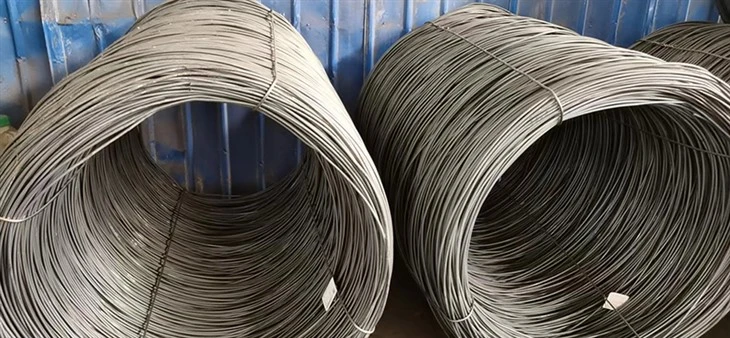
Our Product Range
We offer a wide range of steel wire rod products to meet different customer needs. For example, we have Pure Iron Coil for Aero Engines, which is specially designed for the aerospace industry. It has high purity and excellent mechanical properties, making it suitable for use in aero engines. We also have Iron Wire Rod Inductor, which is used in electrical applications. And our Iron Wire Rod for Magnetic Shielding is great for industries that require magnetic shielding.
Contact Us for Purchase
If you're in the market for high - quality steel wire rod, we'd love to hear from you. Whether you need a small quantity for a specific project or a large - scale supply for your manufacturing operations, we've got you covered. Just reach out to us, and we'll be happy to discuss your requirements and provide you with a competitive quote.
References
- Steelmaking and Refining Volume 1 by The Making, Shaping and Treating of Steel
- Handbook of Steel Production by Peter G. Jones
So, that's the low - down on the manufacturing processes of steel wire rod. I hope you found this blog informative. If you have any questions or want to know more, feel free to drop me a line.


