


The solubility of a substance in water is a fundamental property that influences its behavior and applications in various fields. When it comes to Hydroxy Iron Powder, understanding its solubility in water is crucial for industries that rely on its unique properties. As a supplier of Hydroxy Iron Powder, I am often asked about this very topic, and in this blog post, I will delve into the details of its solubility and its implications.

Understanding Hydroxy Iron Powder
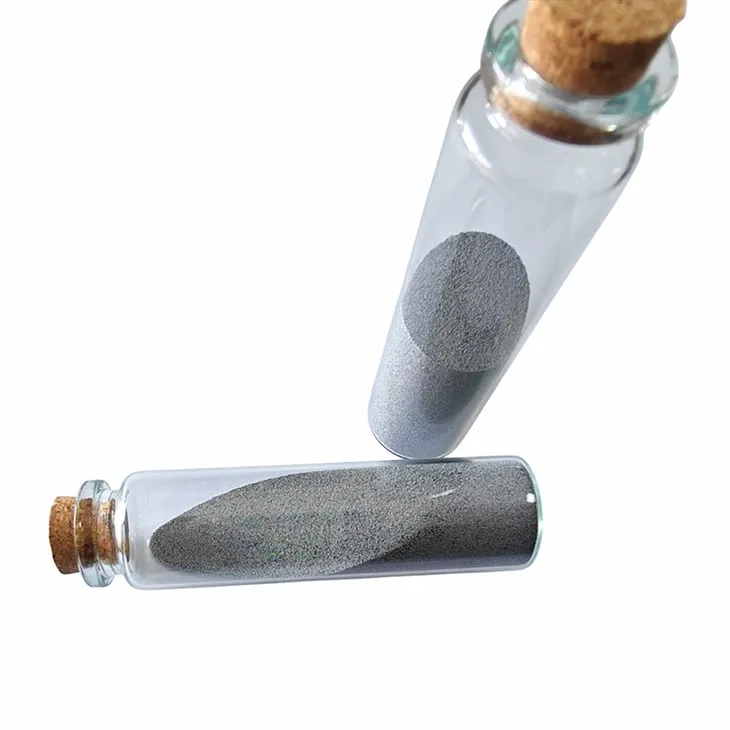
Hydroxy Iron Powder is a specialized form of iron powder that contains hydroxyl groups. These hydroxyl groups play a significant role in the powder's chemical and physical properties. The powder is commonly used in a wide range of applications, including water treatment, catalysis, and the production of magnetic materials. Its unique structure and composition make it a valuable material in these industries.
Solubility of Hydroxy Iron Powder in Water
The solubility of Hydroxy Iron Powder in water is relatively low. Iron, in general, has a low solubility in water under normal conditions. The presence of hydroxyl groups in Hydroxy Iron Powder does not significantly change this characteristic. At room temperature and normal atmospheric pressure, only a very small amount of Hydroxy Iron Powder will dissolve in water.
The solubility of Hydroxy Iron Powder is affected by several factors, including pH, temperature, and the presence of other substances in the water. In acidic solutions, the solubility of iron compounds tends to increase because the acid can react with the iron and its hydroxyl groups, breaking them down into more soluble forms. For example, in a strong acid like hydrochloric acid, the iron in Hydroxy Iron Powder can react to form iron salts that are more soluble in water.
On the other hand, in alkaline solutions, the solubility of Hydroxy Iron Powder is even lower. The hydroxyl ions in the alkaline solution can react with the iron to form insoluble iron hydroxides. This is an important consideration in applications such as water treatment, where the pH of the water can have a significant impact on the performance of Hydroxy Iron Powder.
Temperature also plays a role in the solubility of Hydroxy Iron Powder. Generally, an increase in temperature can increase the solubility of most substances in water. However, for Hydroxy Iron Powder, the effect of temperature on solubility is not very pronounced. Even at elevated temperatures, the solubility remains relatively low.
Implications of Low Solubility
The low solubility of Hydroxy Iron Powder in water has both advantages and disadvantages, depending on the application.
Advantages
- Stability in Water Treatment: In water treatment applications, the low solubility of Hydroxy Iron Powder is beneficial. It can be used to remove contaminants from water without dissolving and adding unwanted iron to the treated water. For example, it can adsorb heavy metals and other pollutants onto its surface, effectively removing them from the water.
- Long - term Performance: In magnetic materials and catalysis, the low solubility ensures the long - term stability of the powder. It does not dissolve over time, maintaining its structure and functionality.
Disadvantages
- Difficulty in Dispersion: In some applications where a homogeneous solution or dispersion of Hydroxy Iron Powder is required, the low solubility can be a problem. Special techniques may be needed to disperse the powder evenly in water, such as the use of surfactants or high - energy mixing methods.
Related Iron Powders and Their Solubility
As a supplier, I also offer other types of iron powders, such as Reduced Iron Powder, Fine Pure Iron Powder (≥99.9% Purity), and Low Carbon Iron Powder. Each of these powders has its own solubility characteristics.
Reduced Iron Powder is produced by reducing iron oxides. Its solubility in water is also relatively low, similar to Hydroxy Iron Powder. However, its reactivity may be different due to its production method and the presence of impurities.
Fine Pure Iron Powder (≥99.9% Purity) has a very high purity level. Its low solubility in water is mainly due to the inherent properties of iron. The high purity ensures that there are no additional substances that could significantly affect its solubility.
Low Carbon Iron Powder contains a small amount of carbon. The carbon content can have a minor impact on its solubility, but overall, it also has a low solubility in water.
Applications Based on Solubility
The low solubility of Hydroxy Iron Powder is exploited in various applications:
Water Treatment
As mentioned earlier, Hydroxy Iron Powder is used in water treatment to remove contaminants. Its low solubility allows it to remain in the water treatment system without dissolving and causing secondary pollution. It can adsorb heavy metals such as lead, mercury, and cadmium, as well as other organic and inorganic pollutants.
Catalysis
In catalytic reactions, the low solubility of Hydroxy Iron Powder ensures that it remains in a solid state during the reaction. This allows it to provide a stable catalytic surface for the reaction to occur. It can be used in reactions such as the decomposition of hydrogen peroxide or the reduction of organic compounds.
Magnetic Materials
Hydroxy Iron Powder is used in the production of magnetic materials. Its low solubility helps to maintain the integrity of the magnetic structure over time. The powder can be incorporated into polymers or other matrices to form magnetic composites with desired properties.
Contact for Procurement
If you are interested in purchasing Hydroxy Iron Powder or any of our other iron powders, I encourage you to reach out for a detailed discussion. Our team of experts can provide you with more information about the products, their properties, and how they can be applied in your specific industry. Whether you need a small quantity for research purposes or a large - scale supply for industrial production, we are here to meet your needs.
References
- Atkins, P., & de Paula, J. (2014). Physical Chemistry. Oxford University Press.
- Housecroft, C. E., & Sharpe, A. G. (2012). Inorganic Chemistry. Pearson.
- Sawyer, D. T., & Roberts, J. L. Jr. (1996). Electrochemistry for Chemists. John Wiley & Sons.


