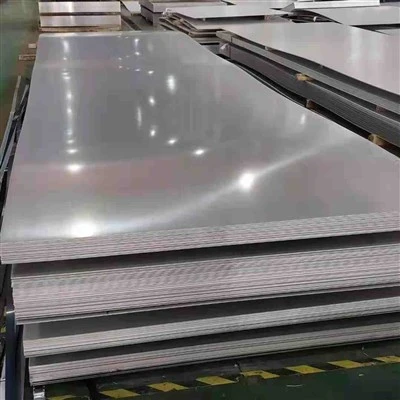

Beilun Metal, a global pioneer in ultra-high-purity iron manufacturing, has achieved a groundbreaking milestone: sub-10ppm impurity levels in its premium-grade pure iron. This innovation redefines industry standards for applications requiring unparalleled precision, from semiconductor manufacturing to quantum computing. Below, we unveil the science, impact, and future implications of this transformative advancement.
The Science Behind Sub-10ppm Purity
Traditional high-purity iron production struggles with residual impurities (20–50ppm) that degrade performance. Beilun's proprietary Triple-Refining Process eliminates 99.99% of contaminants:
|
Process Stage |
Technology |
Impurity Reduction |
|
1. Vacuum Induction Melting (VIM) |
Removes volatile elements (O, N, S) |
O₂ <5ppm, N₂ <8ppm |
|
2. Electroslag Remelting (ESR) |
Dissolves non-metallic inclusions |
SiO₂, Al₂O₃ <2ppm |
|
3. Zone Refining |
Segregates trace metals (Cu, Mn) |
Cu/Mn <0.5ppm |
Result: Total impurities ≤10ppm, surpassing ASTM A848 and JIS C2504 benchmarks.
Key Applications Enabled by Sub-10ppm Iron
|
Industry |
Component |
Performance Gain |
|
Semiconductors |
Sputtering targets |
30% fewer defects in 5nm chip fabrication. |
|
Medical Devices |
MRI magnet cores |
99.99% magnetic uniformity for sharper imaging. |
|
Quantum Computing |
Cryogenic shielding |
Near-zero thermal noise at 4K temperatures. |
|
Aerospace |
Satellite gyroscopes |
50% longer lifespan in radiation-heavy orbits. |
Quality Assurance & Certifications
Beilun's sub-10ppm iron undergoes 17-stage quality checks:
|
Test |
Method |
Standard |
Tolerance |
|
GD-MS Analysis |
Glow Discharge Mass Spectrometry |
ASTM E1447 |
≤10ppm total impurities |
|
Grain Size |
EBSD Microscopy |
ASTM E2627 |
ASTM No. 8–10 (ultra-fine) |
|
Resistivity |
Four-Point Probe |
IEC 60404-13 |
9.71 μΩ·cm (±0.5%) |
Certifications: ISO 9001, IATF 16949, and SEMI F72 (semiconductor-grade compliance).
Sustainability Impact
Beilun's innovation aligns with global decarbonization goals:
- Energy Savings: 40% lower power consumption vs. conventional refining.
- Waste Reduction: 98% closed-loop water recycling in ESR process.
- Carbon Footprint: 0.8 kg CO2/kg iron produced (vs. industry average 2.5 kg).