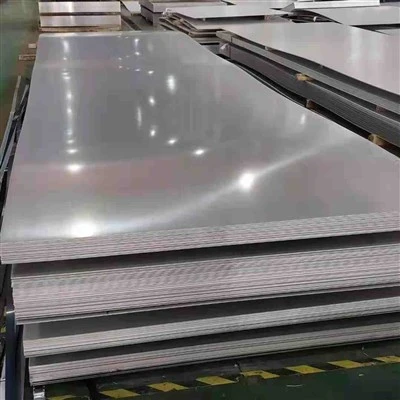

Key Impurities and Their Effects
1. Carbon (C):
- Impact: Carbon atoms disrupt the uniformity of iron's crystal lattice, increasing coercivity (resistance to demagnetization) and reducing permeability.
- Threshold: Carbon levels as low as 0.02% can degrade magnetic efficiency.
- Example: Furnace pure iron (0.02–0.05% C) exhibits higher hysteresis losses compared to ultra-low carbon electromagnetic grades (<0.005% C).
2. Sulfur (S) and Phosphorus (P):
- Impact:These elements segregate at grain boundaries, creating weak points that hinder domain wall movement, leading to increased eddy current losses.
- Threshold: Combined S+P content exceeding 0.01% can compromise magnetic stability.
- Example: Electromagnetic pure iron is refined to ≤0.002% S and P for optimal domain alignment.
3. Silicon (Si):
- Impact: While silicon can improve resistivity and reduce eddy currents, excessive amounts (>0.01%) may reduce saturation induction.
- Balance: Controlled silicon additions are used in some electromagnetic grades to tailor performance.
4. Oxygen (O) and Nitrogen (N):
- Impact: Non-metallic inclusions (e.g., oxides, nitrides) act as pinning sites for magnetic domains, increasing coercivity.
- Solution: Vacuum degassing during production minimizes gas content.
Why Minimizing Impurities Matters
- Enhanced Efficiency: Lower impurity levels reduce energy losses in alternating magnetic fields, crucial for high-frequency applications.
- Consistency: Tight control over trace elements ensures uniform magnetic properties across batches.
- Longevity: Reduced grain boundary defects improve resistance to magnetic aging.
Applications Influenced by Purity
- High-Purity Electromagnetic Iron:
- Power transformers, inductors, magnetic shielding.
- Electric vehicle motors and renewable energy systems.
- Furnace Pure Iron:
- General machinery components, construction fittings.
- Base material for alloy production.
Optimizing Iron for Magnetic Performance
Advanced refining techniques-such as vacuum induction melting (VIM) and electroslag remelting (ESR)-are employed to achieve ultra-low impurity levels in electromagnetic grades. For furnace pure iron, cost-effective smelting processes balance performance with industrial affordability.
The magnetic properties of pure iron are highly sensitive to impurity content, making material selection vital for application success. By understanding these relationships, industries can choose the appropriate grade-whether cost-efficient furnace iron or high-precision electromagnetic iron-to meet their technical and economic needs.