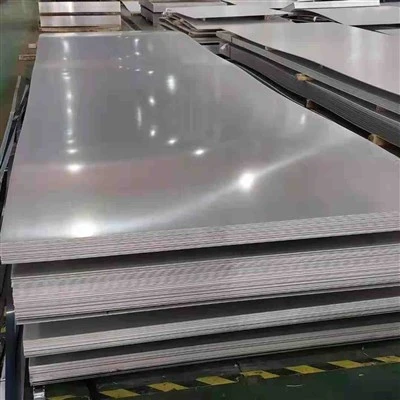
What is Precision Annealing?
Precision annealing is a controlled heat treatment process that gradually heats pure iron to a specific temperature (typically 700–900°C) in an inert atmosphere, followed by slow cooling. This method refines the metal's microstructure, aligning its crystal grains and eliminating internal stresses caused by machining or cold working.
How It Enhances Magnetic Properties
1. Domain Alignment
- Annealing reorganizes magnetic domains (microscopic regions with aligned atomic spins), reducing energy loss during magnetization.
- Result: Higher magnetic permeability (μ) – pure iron becomes more responsive to magnetic fields.
2. Stress Relief
- Removes dislocations and lattice distortions from manufacturing processes (e.g., rolling, cutting).
- Result: Lower coercivity (Hc) – requires less energy to demagnetize, ideal for AC applications.
3. Grain Growth Control
- Promotes uniform grain size, minimizing "pinning" effects that hinder domain movement.
- Result: Reduced hysteresis loss – improves energy efficiency in transformers and motors.
4. Carbon & Impurity Management
- Decarbonizes surfaces and redistributes trace elements (e.g., C, S) into harmless configurations.
- Result: Enhanced saturation flux density (Bs) – maximizes magnetic output.
Key Process Parameters
|
Stage |
Conditions |
Impact on Magnetism |
|
Heating Rate |
50–100°C/hour |
Prevents thermal shock-induced cracks |
|
Soaking Temperature |
850°C (in H₂/N₂ atmosphere) |
Dissolves carbides, homogenizes structure |
|
Soaking Time |
2–4 hours (per 25 mm thickness) |
Ensures complete recrystallization |
|
Cooling Rate |
≤30°C/hour (furnace cooling) |
Avoids residual stress reformation |
FAQ
Q: Can annealing fix magnetic degradation in used iron parts?
A: Yes! Re-annealing restores domain alignment, reviving ≈90% of original magnetic performance.
Q: How does it differ from standard annealing?
A: Precision annealing uses slower heating/cooling rates and atmosphere control to avoid oxidation and ensure consistency.