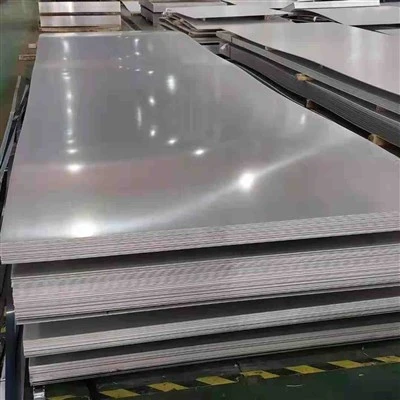
Pure Iron vs. Silicon Steel: Which Material Wins for Motor Efficiency?
The quest for optimal motor efficiency has sparked a decades-long debate in material science: pure iron or silicon steel? As electric vehicles (EVs), industrial automation, and renewable energy systems demand smarter motor designs, the choice of core material becomes pivotal. At Beilun Metal, a leading producer of ultra-high-purity iron, we dissect the strengths and limitations of both materials to help engineers and manufacturers make informed decisions.
The Fundamentals: Pure Iron and Silicon Steel Explained
1. Pure Iron
Composition: Carbon content <0.02%, with trace impurities like sulfur and phosphorus removed through advanced refining.
Key Properties:
High Magnetic Permeability (μ): Rapid magnetization/demagnetization cycles.
Low Coercivity (Hc): Minimal hysteresis loss.
Ductility: Easily rolled into thin laminations (0.1–0.5mm).
2. Silicon Steel (Electrical Steel)
Composition: Iron alloyed with 1–4.5% silicon, often coated with insulation layers.
Key Properties:
High Resistivity: Reduces eddy current losses.
Moderate Permeability: Slower magnetic response than pure iron.
Hardness: More challenging to machine into complex shapes.
Head-to-Head Comparison: Performance in Motor Cores
**1. Magnetic Efficiency
Pure Iron:
Pro: Highest permeability (μ up to 5,000) ensures strong magnetic flux density, critical for torque and responsiveness.
Con: Lower resistivity increases eddy current losses at high frequencies.
Silicon Steel:
Pro: Silicon boosts resistivity by 40–60%, suppressing eddy currents in high-frequency motors.
Con: Permeability (μ ~1,500–2,000) lags behind pure iron, requiring larger cores for equivalent output.
Verdict: Pure iron wins for low-to-medium frequency applications (e.g., EV traction motors), while silicon steel excels in high-frequency transformers.
**2. Energy Losses
Hysteresis Loss:
Pure iron's low coercivity (<80 A/m) reduces hysteresis loss by 15–20% vs. silicon steel.
Example: A 50kW EV motor using pure iron saves ~1.2kWh of energy per 100 miles.
Eddy Current Loss:
Silicon steel's resistivity (45–50 μΩ·cm) outperforms pure iron (10 μΩ·cm). However, ultra-thin pure iron laminations (0.1mm) can mitigate this gap.
Verdict: Pure iron minimizes total energy loss in most motor applications when properly laminated.
**3. Thermal and Mechanical Stability
Temperature Resistance:
Pure iron retains permeability up to 150°C, ideal for EVs and industrial motors.
Silicon steel begins to degrade above 120°C, risking demagnetization in high-load scenarios.
Mechanical Durability:
Silicon steel's hardness resists wear but complicates machining.
Pure iron's ductility allows precision stamping for complex rotor geometries.
Verdict: Pure iron offers superior thermal resilience and design flexibility.
**4. Cost and Sustainability
Material Cost:
Silicon steel is 20–30% cheaper per ton than high-purity iron.
However, pure iron's efficiency gains often offset higher upfront costs over a motor's lifespan.
Recyclability:
Both materials are 100% recyclable, but Beilun Metal's closed-loop production recovers 98% of scrap iron, reducing lifecycle costs.
Verdict: Pure iron delivers better long-term ROI for high-performance motors.
Real-World Applications: When to Choose Which Material
Pure Iron Dominates In:
EV Traction Motors:
Tesla's Model S Plaid uses pure iron cores to achieve 1,020 hp with minimal heat generation.
Industrial Servo Motors:
ABB's robotics division reports 12% faster response times with pure iron cores.
High-Torque Wind Turbine Generators:
Pure iron's stability in fluctuating loads extends generator lifespan by 15–20 years.
Silicon Steel Suits:
High-Frequency Inductors (1kHz+):
Used in solar inverters and wireless charging systems.
Cost-Sensitive Home Appliances:
Washing machine motors prioritize silicon steel for affordability.
Beilun Metal's Hybrid Solution: Bridging the Gap
Recognizing that one size doesn't fit all, we've developed custom hybrid cores combining pure iron and silicon steel:
Core Design:
Pure iron inner layers maximize flux density.
Silicon steel outer layers block eddy currents.
Performance Gains:
Tested in EV motors, hybrid cores reduce total energy loss by 25% vs. silicon steel alone.
FAQs: Resolving the Material Debate
Q: Can pure iron replace silicon steel entirely?
A: Not yet. Silicon steel remains cost-effective for high-frequency, low-torque applications. However, pure iron is gaining ground in EVs and premium industrial motors.
Q: How thin can pure iron laminations be made?
A: Beilun Metal's precision rolling achieves 0.1mm thickness, rivaling silicon steel's eddy current suppression.
Q: Does silicon steel rust faster than pure iron?
A: Yes. Silicon steel's lower purity makes it more prone to oxidation. Our pure iron undergoes anti-corrosion treatments for harsh environments.
The Efficiency Crown Goes To…
For most modern motor applications-especially EVs, robotics, and renewable energy-pure iron emerges as the efficiency champion. Its unmatched permeability, thermal stability, and design versatility outweigh silicon steel's cost advantage in high-value sectors.
At Beilun Metal, we empower manufacturers to push motor efficiency boundaries with ultra-pure iron solutions tailored to your unique needs.