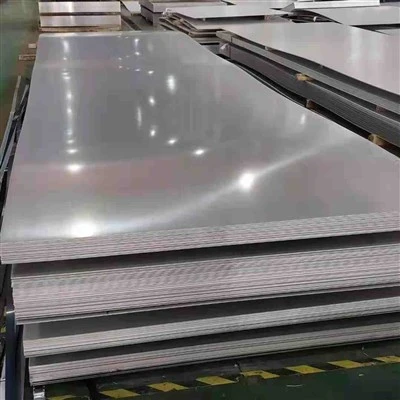

The Evolution and Applications of Ultra-High-Purity Iron in Modern Industry
Pure iron, long considered the backbone of metallurgy, has undergone a transformative evolution in recent decades. No longer confined to traditional steelmaking, ultra-high-purity iron (99.99%+) is now a critical enabler of cutting-edge technologies, from quantum computing to green energy systems.
1. The Pursuit of Atomic Perfection: Advances in Pure Iron Production
The demand for ultra-high-purity iron has driven innovations in refining technologies, pushing impurity levels to sub-ppm (parts per million) ranges:
Key Refining Breakthroughs
Plasma Arc Melting (PAM): Replaces traditional coke-based furnaces with hydrogen plasma, reducing carbon content to ≤0.003% and slashing CO₂ emissions by 60%.
Electroslag Remelting (ESR): Achieves sulfur levels ≤0.0005% by using reactive slags to absorb impurities, critical for aerospace alloys.
Cryogenic Vacuum Distillation: Removes trace gases (O₂, N₂) to <5 ppm, enabling hydrogen-resistant materials for energy storage.
The Role of AI and IoT
Machine learning algorithms now optimize furnace parameters in real-time, achieving ±0.0002% compositional consistency. Blockchain-enabled traceability ensures batch-to-batch reliability for sensitive applications like semiconductor manufacturing.
2. Industry Applications: Where Purity Drives Innovation
Ultra-pure iron's unique properties-low coercivity, high permeability, and chemical inertness-make it indispensable across sectors:
a) Semiconductor Manufacturing
EUV Lithography Stages: Iron with tin/lead <0.01 ppm prevents defects in 2nm chip production.
Sputtering Targets: 99.999% purity ensures ultrathin film uniformity for 3D NAND flash memory.
b) Quantum Technologies
Magnetic Shielding: μmax >30,000 at cryogenic temperatures (-269°C) stabilizes qubit coherence in quantum processors.
Superconducting Cavities: Oxygen <5 ppm minimizes RF loss in particle accelerators like CERN's LHC.
c) Green Energy Systems
Hydrogen Electrolyzers: Sulfur ≤0.0005% extends catalyst life in proton exchange membrane (PEM) systems.
Fusion Reactors: Boron-doped iron liners withstand 14 MeV neutron flux without swelling (ITER-validated).
d) Aerospace & Defense
Hypersonic Vehicle Skins: Ultra-low oxygen (<5 ppm) prevents microvoids in titanium-iron composites at Mach 10+.
Satellite Components: Radiation-resistant iron alloys ensure longevity in low-Earth orbit (LEO).
3. Sustainability Challenges and Solutions
The production of high-purity iron faces significant environmental hurdles, prompting innovative responses:
Carbon-Neutral Production
Hydrogen Plasma Smelting: Replaces coking coal with green hydrogen, cutting emissions by 3.2 tons CO₂ per ton of iron.
Carbon Capture: Integrated molten oxide electrolysis (MOE) absorbs 150% of emissions via mineralization.
Circular Economy Models
Closed-Loop Recycling: 99.9% of scrap is reprocessed into high-purity feedstock using plasma arc refining.
Waste Valorization: Slag is converted into carbon-negative cement additives, reducing landfill dependency.
Water Stewardship
Dry milling and vapor deposition techniques have reduced water consumption by 90% compared to traditional methods.
4. Global Market Trends and Future Outlook
Market Drivers
Quantum Computing Boom: Projected $10B market by 2030 demands iron for magnetic shielding and cryogenic systems.
Hydrogen Economy Expansion: Global electrolyzer capacity is expected to reach 170 GW by 2030, requiring 450K tons of ultra-pure iron annually.
Semiconductor Miniaturization: Transition to 1.4nm nodes by 2027 will tighten purity requirements to sub-ppb (parts per billion) levels.
Technological Frontiers
Additive Manufacturing: Gas-atomized iron powders (99.99% sphericity) enable 3D-printed fusion reactor components.
Smart Materials: Iron-graphene composites are being tested for self-healing radiation shields in space applications.
Regulatory Landscape
EU Critical Raw Materials Act: Lists high-purity iron as strategic for clean tech, incentivizing local production.
U.S. CHIPS and Science Act: Allocates $52B for semiconductor infrastructure, indirectly boosting iron demand.
5. Case Study: ITER Fusion Project – A Purity Benchmark
The International Thermonuclear Experimental Reactor (ITER) exemplifies ultra-pure iron's transformative potential:
Challenge: Neutron radiation causes swelling in reactor walls, risking plasma containment.
Solution: Boron-doped, ultra-low carbon (0.002%) iron liners absorb neutrons without deformation.
Result: Projected 20-year lifespan extension, saving €2.1B in maintenance costs.
6. Conclusion: The Path Forward
Ultra-high-purity iron stands at the intersection of tradition and innovation. As industries push the limits of material science, the race to achieve sub-ppb impurity levels and carbon-negative production will redefine metallurgy's role in a sustainable future. Companies leading this charge-through AI-driven refinement, circular practices, and cross-industry collaboration-are poised to shape the next century of technological progress.
Keywords :
Ultra-high-purity iron production
Quantum computing magnetic materials
Green hydrogen
Semiconductor-grade iron standards
Sustainable metallurgy trends