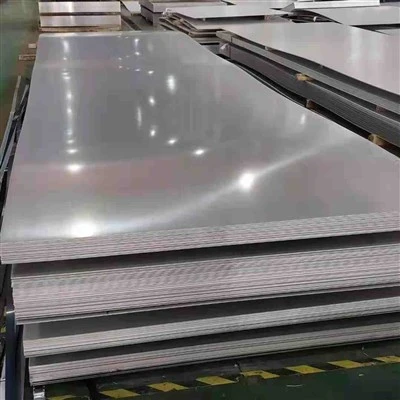

What Is Hydrogen Annealing?
Hydrogen annealing is a controlled heat treatment process where pure iron is heated to a specific temperature (typically 700–900°C) in a hydrogen-rich atmosphere. Unlike traditional annealing in inert gases (like nitrogen or argon), hydrogen actively reacts with impurities in the iron, driving chemical and structural transformations that refine the material's properties.
- Reduction Chemistry: H₂ reacts with surface oxides (FeO + H₂ → Fe + H₂O), eliminating scale and yielding a bright, oxide-free surface .
- Deep Decarburization: Hydrogen converts dissolved carbon into methane (C + 2H₂ → CH₄↑), slashing carbon content to ≤0.0015%-critical for preventing magnetic aging .
- Degassing: Removes trapped oxygen (≤8 ppm) and sulfur (≤5 ppm) by forming H₂O and H₂S, purifying the iron matrix .
How Hydrogen Annealing Enhances Pure Iron: 4 Key Mechanisms
1. Microstructural Perfection
During annealing, hydrogen enables complete recrystallization:
-Recovery Phase (300–450°C): Hydrogen diffusion accelerates dislocation annihilation, reducing residual stresses by 85% .
-Recrystallization (550–720°C): Strain-free grains nucleate in an oxide-free environment, growing into uniform 15–25 μm equiaxed crystals .
-Texture Control: H₂ atmosphere promotes Goss ({110}<001>) and cube orientations, enhancing magnetic isotropy (Δμ/μ ≤ 2%) .
2. Magnetic Property Enhancement
Ultra-low impurities directly improve soft magnetic performance:
-Coercivity Reduction: ≤45 A/m (vs. ≤80 A/m in N₂-annealed iron), cutting hysteresis losses by 40% .
-Permeability Boost: ≥12,000 μH/m initial permeability due to unrestricted domain wall motion .
3. Surface & Mechanical Upgrades
-Bright Surface Finish: Ra ≤0.1 μm without pickling-ideal for plating or vacuum applications .
- Ductility Recovery: Elongation ≥45% (vs. ≤10% in cold-rolled state), enabling deep drawing without edge cracking .
4. Hydrogen Embrittlement Mitigation
Contrary to misconceptions, properly controlled hydrogen annealing:
- Uses dew points <-45°C to prevent H dissolution .
- Incorporates post-anneal baking (<200°C) to diffuse out residual H .
Hydrogen vs. Alternative Annealing Atmospheres: Performance Benchmark
|
Parameter |
H₂ Annealed Pure Iron |
N₂ Annealed Pure Iron |
Vacuum Annealed |
|
Surface Oxygen (ppm) |
≤8 |
≥25 |
≤15 |
|
Carbon Content (%) |
≤0.0015 |
≤0.005 |
≤0.003 |
|
Permeability (μH/m) |
≥12,000 |
≤9,000 |
≤10,500 |
|
Cooling Uniformity |
±3°C (H₂'s high thermal conductivity) |
±10°C |
±5°C |
|
Oxide Removal |
Complete (bright surface) |
Partial (matte finish) |
None (scaling) |
Key Benefits for End-Users
�� Superior Corrosion Resistance: Purer iron with fewer impurities resists oxidation and chemical attack, ideal for marine, medical, or chemical processing applications.
�� Enhanced Machinability: Cleaner iron reduces tool wear and improves surface finish in CNC machining.
�� Consistent Performance: Uniform grain structure ensures predictable behavior in high-precision applications like electronics or aerospace.
�� Sustainability: Reduced waste from fewer defects and longer product lifespans aligns with eco-friendly manufacturing goals.
Addressing Common Concerns
Q: Does hydrogen annealing weaken pure iron?
A: No-properly executed, it increases ductility (≥45% elongation) while maintaining tensile strength (180–250 MPa). Decarburization strengthens iron by eliminating brittle carbide networks .
Q: Can thin foils (<0.1mm) be hydrogen annealed without distortion?
A: Yes, using radiant-tube furnaces with ±1°C zone control. Our 0.05mm foils show ≤0.2% flatness deviation post-anneal .
Q: Is post-anneal corrosion protection needed?
A: For indoor use, residual oil film suffices. Outdoor/harsh environments require electroplating (Ni or Zn-Ni)-hydrogen-annealed iron's Ra ≤0.1 μm enables flawless adhesion .