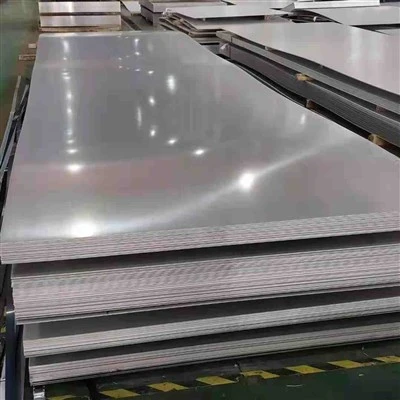

For engineers designing electromagnetic systems-from precision relays to EV motors-core material selection directly impacts performance, efficiency, and longevity. As leading pure iron manufacturers, we leverage decades of metallurgical expertise to explain why pure iron (≥99.5% Fe) outperforms alternatives like silicon steel or ferrites in critical applications.
Where Pure Iron Outperforms Alternatives
|
Application |
Key Requirement |
Pure Iron Solution |
Compromises with Alternatives |
|
EV Relay Cores |
Fast switching, low hysteresis |
DT4A: Hc≤72 A/m, μmax≥7,000 mH/m |
Ferrites: Low Bs (0.5T), brittle |
|
Transformer Cores |
High Bs, low core loss |
DT4C: Bs=2.15T, μmax≥15,000 mH/m |
Silicon steel: Eddy current losses ↑ |
|
MRI Shielding |
Zero magnetic interference |
DT9: Vacuum-grade purity |
Mu-metal: 5x cost, difficult to machine |
|
DC Motor Poles |
High vibration resistance |
Hot-rolled DT4 rods (220 MPa yield) |
Powdered iron: Lo |
Data sourced from industry testing and material certs
The Science Behind Pure Iron's Superiority
Microstructural Perfection
Industrial pure iron (e.g., ARMCO® iron) undergoes hydrogen annealing to achieve:
- >99.8% purity with carbon ≤0.004%, sulfur/phosphorus ≤0.01% .
- Uniform ferritic grains eliminating voids/inclusions that disrupt magnetic domains.
This contrasts with silicon steel's heterogeneous structure and ferrites' granular porosity .
Pure Iron vs. Competitors: Technical Breakdown
|
Property |
Pure Iron (DT4C) |
Silicon Steel (GO) |
Ferrite (Mn-Zn) |
Powdered Iron |
|
Saturation Flux (T) |
2.15 |
2.0 |
0.5 |
1.5 |
|
Coercivity (A/m) |
≤32 |
80–120 |
10–50 |
100–500 |
|
Permeability (μmax) |
≥15,000 |
40,000 |
15,000 |
100 |
|
Core Loss @1kHz |
Low |
Medium |
Very Low |
High |
|
Cost Efficiency |
★★★★☆ |
★★★☆☆ |
★★☆☆☆ |
★★★★★ |
Note: Pure iron leads in DC/static-field applications; ferrites better suit MHz frequencies
Selecting the Right Pure Iron Grade
Match your application to these industry-standard grades:
- DT4 / DT4A: General-purpose relays, motor cores .
- DT4E / DT4C: Precision instruments, aerospace sensors (ultra-low Hc) .
- DT8 / DT9: High-vacuum environments (electron tubes, space hardware) .
Top 3 Questions from Engineers
Q: Can pure iron replace ferrites in high-frequency inductors?
A: For frequencies >100 kHz, ferrites remain better due to lower eddy losses. Below 100 kHz, use pure iron for higher Bs and thermal stability .
Q: How to prevent corrosion in humid environments?
A:Opt for phosphated or nickel-plated pure iron-2x longer life in salt spray tests vs. uncoated iron .
Q: Does welding degrade magnetic properties?
A: Yes-for critical EM parts, post-weld hydrogen annealing at 780–850°C restores grain structure .