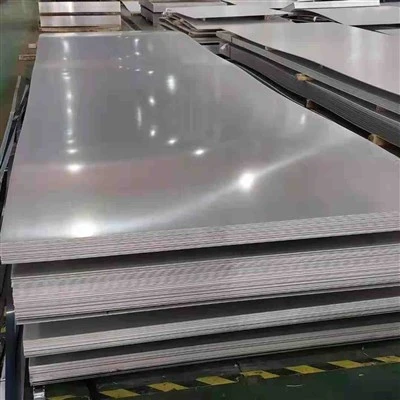
Pure iron is a critical material in industrial applications, but its properties vary significantly depending on production methods and intended use. Below, we compare Electrical Grade Pure Iron and Furnace-Produced Pure Iron, highlighting their differences and applications.
1. Key Differences
|
Parameter |
Electrical Grade Pure Iron |
Furnace-Produced Pure Iron |
|
Production Process |
Refined via vacuum induction melting (VIM) or electroslag remelting (ESR) to minimize impurities. |
Produced in basic oxygen furnaces (BOF) or electric arc furnaces (EAF) with standard refining. |
|
Purity Level |
≥99.95% Fe |
99.5–99.8% Fe |
|
Carbon Content |
≤0.008% C |
0.02–0.05% C |
|
Key Impurities |
S ≤0.005%, P ≤0.01%, O ≤0.0015% |
S ≤0.02%, P ≤0.03%, O ≤0.003% |
|
Magnetic Properties |
High permeability (μ ≥150,000 µH/m), low coercivity. |
Moderate permeability (μ ≤50,000 µH/m). |
|
Mechanical Strength |
Lower tensile strength (250–350 MPa) |
Higher tensile strength (350–500 MPa) |
|
Primary Focus |
Optimized for magnetic performance. |
Balanced for structural and mechanical use. |
2. Applications
Electrical Grade Pure Iron
- Transformers & Inductors: Core laminations due to low core loss (≤1.2 W/kg).
- Magnetic Shielding: Blocks electromagnetic interference (EMI) in sensitive devices.
- MRI Machines: High saturation flux (2.16 T) ensures precise imaging.
- Sensors & Relays: Predictable magnetic behavior for accurate signal transmission.
Furnace-Produced Pure Iron
- Structural Components: Machinery bases, brackets, and frames requiring moderate strength.
- Tooling: Dies, molds, and fixtures where ductility is prioritized over hardness.
- General Fabrication: Pipes, valves, and automotive parts in non-critical environments.
- Corrosion-Resistant Coatings: Base material for galvanized or nickel-plated products.
3. Composition Comparison
|
Element |
Electrical Grade (ppm) |
Furnace-Produced (ppm) |
|
Fe |
≥99,950 |
≥99,500 |
|
C |
≤8 |
≤50 |
|
Si |
≤5 |
≤20 |
|
Mn |
≤10 |
≤30 |
|
S |
≤5 |
≤20 |
|
P |
≤10 |
≤30 |
|
O |
≤15 |
≤30 |
4. Why Choose Electrical Grade Pure Iron?
- Precision: Ultra-low impurities ensure stable magnetic properties.
- Efficiency: Reduces energy loss in high-frequency applications.
- Certifications: Complies with IEC 60404-8, ASTM A848.
5. Why Choose Furnace-Produced Pure Iron?
- Cost-Effective: Lower production costs for non-specialized uses.
- Versatility: Suitable for welding, forging, and machining.
- Durability: Higher mechanical strength for structural applications.
While both types of pure iron share a base composition,Electrical Grade Pure Iron is engineered for electromagnetic performance, whereas Furnace-Produced Pure Iron prioritizes mechanical utility. Understanding these differences ensures optimal material selection for industrial, electrical, or structural projects.