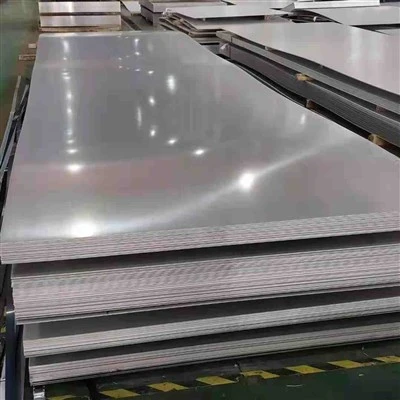

Pure iron, one of the most versatile and foundational materials in modern industry, is defined by its near-total absence of impurities (typically >99.8% Fe).
Pure Iron vs. Common Iron Alloys: A Comparative Analysis
While most industrial "iron" contains additives (e.g., carbon for steel), pure iron's unique properties stem from its minimal impurity content.
|
Property |
Pure Iron (Beilun) |
Low-Carbon Steel |
Cast Iron |
|
Iron Content |
99.8–99.99% |
98–99.5% |
92–95% |
|
Carbon Content |
≤0.008% |
0.05–0.25% |
2–4% |
|
Tensile Strength |
250–350 MPa |
400–550 MPa |
200–400 MPa |
|
Electrical Conductivity |
10.3 MS/m |
6.99 MS/m |
5.5 MS/m |
|
Primary Use Case |
Magnetic cores, medical implants |
Construction, automotive parts |
Engine blocks, pipes |
Chemical Composition of Beilun's Pure Iron
|
Element |
Beilun Pure Iron (ppm) |
Industry Standard (ppm) |
Impact of Low Impurities |
|
Iron (Fe) |
≥99.95% |
≥99.8% |
Maximizes magnetic permeability. |
|
Carbon (C) |
≤8 |
≤20 |
Eliminates brittleness in cryogenic uses. |
|
Sulfur (S) |
≤5 |
≤15 |
Prevents hot cracking during fabrication. |
|
Phosphorus (P) |
≤10 |
≤25 |
Enhances corrosion resistance. |
|
Oxygen (O) |
≤15 |
≤30 |
Reduces oxide inclusions. |
|
Silicon (Si) |
≤5 |
≤12 |
Improves thermal stability. |
Key Properties of Pure Iron
1. Magnetic Performance
- Permeability (μ): 150,000–300,000 µH/m (vs. 1,000–5,000 µH/m for steel).
- Applications: Transformers, MRI machines, magnetic shielding.
2. Thermal & Electrical Conductivity
- Thermal Conductivity: 80 W/m·K (30% higher than steel).
- Electrical Resistivity: 9.7 µΩ·cm (ideal for semiconductors).
3. Ductility & Formability
- Elongation: 35–45% (enables cold forging and deep drawing).
How Pure Iron is Made: Beilun's Manufacturing Process
Step 1: Raw Material Refining
- Input: 99.7% Fe scrap or hematite ore.
- Process: Vacuum Induction Melting (VIM) removes gases (O₂ <20 ppm, N₂ <30 ppm).
Step 2: Electroslag Remelting (ESR)
- Purpose: Eliminates non-metallic inclusions (size ≤5 µm).
- Slag Composition: CaF₂-CaO-Al₂O₃ (70:20:10 ratio).
Step 3: Final Purification
- Zone Refining: Achieves 99.99% purity (≤50 ppm total impurities).
Applications of Pure Iron
|
Industry |
Component |
Why Pure Iron? |
|
Electronics |
Inductor cores |
Low core loss (≤1.2 W/kg at 1.5 T/50 Hz). |
|
Medical |
Surgical implants |
Biocompatibility, non-toxic. |
|
Energy |
Transformer laminations |
High saturation flux (2.16 T). |
|
Research |
Particle accelerator parts |
Ultra-high vacuum compatibility. |