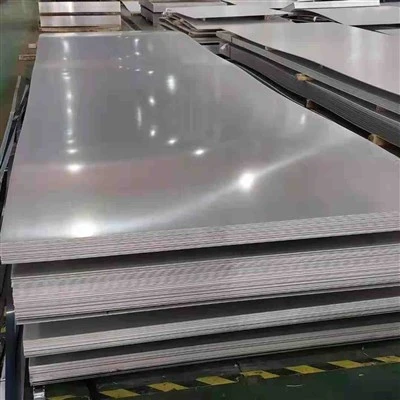
High-purity iron (typically >99.99% or 4N purity) is the backbone of advanced alloys, semiconductors, and aerospace components. Unlike regular steel, its exceptional magnetic properties, corrosion resistance, and conductivity stem from drastically reduced impurity levels (C, O, S, P, Si < 0.01% collectively). As a producer, understanding this refined process highlights our technical edge. Here's how raw ore transforms into ultra-pure iron.
Step 1: Ore Selection & Beneficiation
Not all iron ores are equal. High-grade hematite (Fe₂O₃) or magnetite (Fe₃O₄) with minimal gangue (silica, alumina) is essential. To achieve this:
- Crushing & Grinding: Ore is crushed in 3 stages, with magnetic separation after each step to discard non-iron impurities early.
- Advanced Concentration: Ore undergoes froth flotation or multi-stage magnetic separators. In China's Shanxi region, magnetite ore (67% Fe) is processed through variable-frequency scrubbing machines, raising purity to >70% Fe while reducing SiO₂to <0.15%. This "hyperpure concentrate" forms the base feedstock.
Step 2: Primary Reduction – Removing Bulk Impurities
Here, iron oxides convert to metallic iron while expelling carbon, sulfur, and silicon:
- Direct Reduction (DRI Route): High-grade concentrate reacts with hydrogen gas (H₂) in a shaft furnace. Unlike coke-based blast furnaces, H₂reduction avoids carbon contamination, yielding >99% carbon-free iron (DRI).
- Smelting Separation: DRI is melted. Crucially, residual FeO in DRI enables dephosphorization by forming P-rich slag. Impurities like Si, Mn, Ti partition into the slag phase.
Step 3: Deep Refining – Reaching 3N-4N Purity
DRI or purified pig iron still contains gaseous impurities (O, N, H) and trace metals. Advanced metallurgy tackles these:
- Slag Refining: High-basicity slag (CaO/SiO₂ > 4) absorbs dissolved oxygen. This reduces oxygen from ~500 ppm to <10 ppm in the molten iron.
- Vacuum Treatments: Liquid iron undergoes vacuum degassing (e.g., VD, VOD processes). Under low pressure, carbon and oxygen react to form CO gas, removed via bubbling argon:
`[C] + [O] → CO(g)`
This drops carbon to <0.003% and oxygen to <0.001%.
- Alloy Additions: Aluminum or rare earths (Ce/La) bind residual sulfur/phosphorus into stable sulfides/phosphides easily skimmed as slag.
Step 4: Pushing to 5N+ Ultra-Purity (99.999%)
For semiconductor or nuclear applications, even ppm-level impurities matter. Two cutting-edge methods dominate:
1. Plasma Arc Refining:
- Oxidation Stage: Argon plasma melts iron while adding Fe₂O₃. Impurities like Si, C, Ti evaporate as SiO/CO gases or form oxides. Removes >85% of Si/C/Ti in 15 mins.
- Reduction Stage: Hydrogen plasma eliminates residual O/N/S. Achieves >99.99% O removal and final purity of 99.999% (5N).
2. Zone Refining: A rod of 4N iron passes through a floating induction zone. Impurities concentrate in the molten zone and migrate to the rod's end. Repeated passes yield 99.9992% Fe (5N).
Why High-Purity Iron Matters
- Technically Pure Iron: Used for soft magnetic cores, deep-drawn auto parts.
- High-Purity Iron : Critical for superalloys (jet engines), precision instruments.
- Ultra-Pure Iron : Essential in quantum computing substrates and fusion reactor materials.
> Fun Fact: Ancient Egyptians sourced "pure iron" from meteorites. Modern methods achieve purities those craftsmen couldn't imagine!