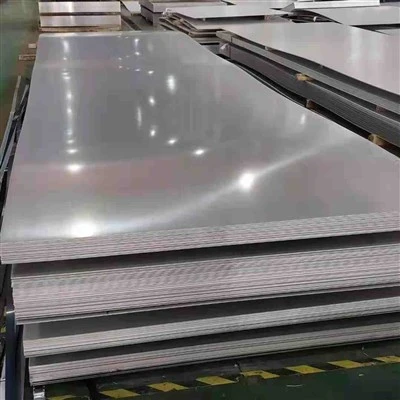

High-purity iron (≥99.9% Fe) and commercial-grade iron are fundamentally distinct materials, separated by atomic-level impurity profiles that dictate their performance, applications, and value. Here's why they belong to different universes of metallurgy:
1. The Atomic Architecture: Impurity Control Defines Identity
- High-Purity Iron (HPI):
- Critical Impurity Thresholds: Oxygen (≤10 ppm), Carbon (≤20 ppm), Sulfur (≤5 ppm).
- Production Methods: Electrolytic refining, hydrogen reduction (DRI), or zone melting-processes that strip away non-iron atoms at sub-ppm levels.
- Regular Iron:
- Purity Range: 96–99.8% Fe (e.g., cast iron: 96%, wrought iron: 99.4%).
- Dominant Impurities: Carbon (up to 4% in cast iron), silicon (1–3%), manganese, sulfur, phosphorus.
- Production Scale: Blast furnace smelting prioritizes volume over atomic precision, locking in impurities.
2. Performance Divergence: How Purity Dictates Behavior
Mechanical Properties
|
Property |
High-Purity Iron (5N) |
Cast Iron |
Scientific Insight |
|
Yield Strength |
35–50 MPa |
100–300 MPa |
Impurity atoms pin dislocations, strengthening low-purity iron11. |
|
Elongation |
40–50% |
2–20% |
Ultra-low carbon in HPI enables unrestricted crystal slip11. |
|
Hardness |
30–40 HV |
200–1,180 HB |
Hardness scales inversely with purity due to absent interstitial atoms |
Functional Properties
- Magnetic Behavior:
- HPI exhibits near-zero coercivity (<10 A/m) and high saturation magnetization-critical for MRI shields and soft magnetic cores.
- Cast iron's graphite flakes disrupt magnetic flux, making it useless in electronics.
- Corrosion Resistance:
- HPI forms a passive oxide layer when alloyed with Cr, but pure forms require controlled environments to avoid rust.
- Regular iron rusts aggressively due to micro-galvanic cells between iron matrix and carbide inclusions.
- Thermal/Electrical Conductivity:
- HPI achieves 80 W/m·K thermal conductivity and 96 nΩ·m resistivity-superior to stainless steel by 300%.
- Impurities in regular iron scatter electrons/phonons, degrading conductivity.
High-purity iron is not merely "refined regular iron"-it is a distinct engineered material born from atomic-scale control. Its value lies in absence: the elimination of impurities that sabotage performance in critical applications. From enabling quantum-level magnetic precision to ensuring drug safety, HPI operates where failure is not an option.