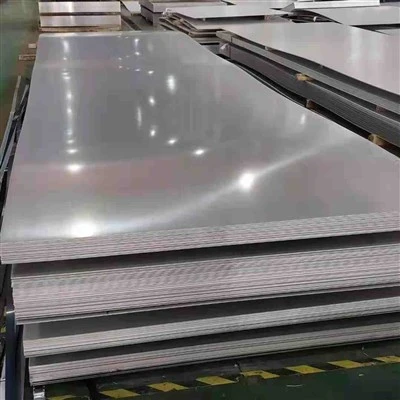

Pure iron's ability to withstand extreme temperatures makes it indispensable for industries ranging from aerospace to energy production. As a producer of high-purity iron, we delve into the metallurgical principles and innovative applications that define its performance under thermal stress.
1. Structural Stability Across Temperature Phases
Pure iron exhibits unique phase transitions that govern its behavior in extreme heat:
- α-Fe (BCC Phase): Stable up to 912°C, this body-centered cubic structure dominates at lower temperatures, offering excellent thermal conductivity and magnetic properties.
- γ-Fe (FCC Phase): Between 912°C and 1,394°C, the face-centered cubic phase enhances ductility, critical for hot-forming processes like forging and rolling.
- δ-Fe (BCC Phase): Above 1,394°C, iron reverts to a high-temperature BCC structure, maintaining stability until melting at 1,538°C.
Recent studies reveal that under extreme pressure (300+ GPa) and temperatures (~5,000 K), pure iron's FCC and HCP phases coexist, suggesting applications in modeling Earth's core dynamics.
2. Defying Thermal Degradation
Advanced production techniques enhance pure iron's high-temperature resilience:
- Electro-Pulsing Treatments: High-energy pulsed currents (e.g., 55 kV) refine grain boundaries, reducing defects and increasing hardness by up to 216 HV30. This method improves wear resistance in furnace components and nuclear reactor linings.
- Vacuum Distillation: Removes trace impurities (S, P <10 ppm), preventing embrittlement and oxidation at elevated temperatures.
- Super Gravity Separation: Eliminates iron impurities from alloys, ensuring >99.95% purity for applications like fusion reactor shielding.
3. Liquid-State Behavior Near Melting Points
Near its melting point, liquid pure iron retains short-range atomic order:
- Clustered Atomic Structures: X-ray diffraction shows residual body-centered cubic (BCC) units in molten iron, which reduce fluidity but enhance stability in casting processes.
- Temperature-Dependent Changes: As temperatures rise, atomic clusters shrink, decreasing coordination numbers and nearest-neighbor distances. This property is leveraged in precision casting for aerospace turbine blades.
4. Applications in Extreme Environments
- Nuclear Reactors:High-purity iron's neutron transparency and thermal stability (up to 1,394°C) make it ideal for reactor shielding and structural components.
- Renewable Energy: Used in hydrogen electrolyzers and wind turbine generators, where low eddy current losses and oxidation resistance are critical.
- Spacecraft Components:Retains strength in vacuum and extreme thermal cycling, suitable for rocket engine nozzles and satellite housings.
Why Choose Our Pure Iron?
- Sustainability: Produced via hydrogen reduction and electrolysis, reducing CO₂ emissions by 90% compared to traditional methods.
- Custom Solutions: Tailored formats (foils, wires) for niche high-temperature applications like quantum computing cryostats.
- Global Certifications: Meets ISO 14064 and EU Taxonomy for green manufacturing.