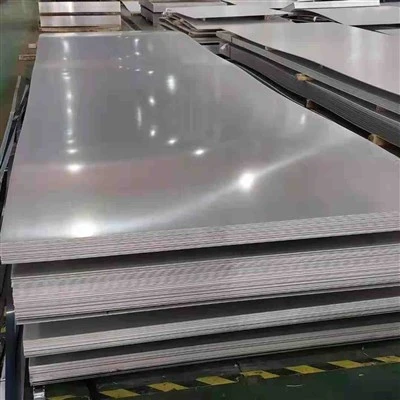

Pure iron is a cornerstone of advanced manufacturing, but its "purity" is more than a marketing term-it's a rigorously controlled scientific achievement. As a producer of metallurgical-grade pure iron, we break down the key factors that define its purity and why it matters for industries like semiconductors, aerospace, and precision engineering.
1. Defining "Purity": Carbon and Impurity Thresholds
Pure iron is classified by its carbon content and trace element limits. Unlike steel (which contains up to 2% carbon) or cast iron (over 2% carbon), industrial pure iron typically has carbon levels below 0.025%, with some high-grade variants reaching 0.0015% carbon . For example, China's GBW01401 standard specifies carbon content at 0.0015% ± 0.0002%, alongside tightly controlled impurities like silicon (0.049%), manganese (0.017%), and sulfur (0.0015%) .
2. The Elimination of "Unwanted Guests"
Pure iron's performance hinges on minimizing non-metallic impurities (e.g., sulfur, phosphorus) and alloying residuals (e.g., chromium, nickel). Even trace amounts (as low as 0.003% copper or 0.0025% titanium) can disrupt magnetic properties or corrosion resistance. Advanced refining techniques, such as vacuum melting and electron beam remelting, strip away these elements to achieve parts-per-million (ppm) impurity levels.
3. Production Methods: How Purity is Achieved
- Solid-State Decarburization: A cost-effective method for small-scale producers, this process involves granulating molten iron, oxidizing carbon in a controlled gas atmosphere, and remelting in electric furnaces to achieve carbon levels <0.025% .
- Electro-Pulsing Treatments: High-energy pulsed currents (e.g., 55 kV) refine grain structures, reducing defects while enhancing hardness and thermal stability .
- Super Gravity Separation: Used in tin-iron purification, this technique leverages centrifugal forces to remove iron impurities from alloys, achieving >98% iron removal rates .
4. Standards and Certifications
Industrial pure iron adheres to strict international standards:
- ASTM A848: Specifies electromagnetic properties and impurity limits for electrical applications.
- GB/T 9971: Chinese standard for ultra-low carbon steel, emphasizing ≤0.004% sulfur and phosphorus .
Third-party certifications (e.g., mill test reports) ensure traceability and compliance.
5. Why Purity Matters
- Magnetic Performance: Impurities like carbon and sulfur increase coercivity, reducing efficiency in transformers and MRI components.
- Thermal Stability: High-purity iron maintains structural integrity up to 912°C (α-Fe phase), critical for furnace parts and reactors.
-Corrosion Resistance: Lower impurity levels delay oxidation, extending lifespan in non-aggressive environments.
Quality Control: Beyond the Lab
Advanced analytical methods ensure consistency:
- Infrared Absorption: Detects carbon at ppm levels.
- Spectrophotometry: Measures trace elements like chromium and nickel .
- Uniformity Testing: Variance (F-test) confirms homogeneity across batches.
Key Takeaway
"Pure" iron isn't just about iron content-it's a symphony of precision metallurgy, rigorous standards, and cutting-edge purification. By mastering these elements, industries unlock materials capable of powering everything from quantum computing hardware to sustainable energy systems.