
1. What Is Industrial Pure Iron?
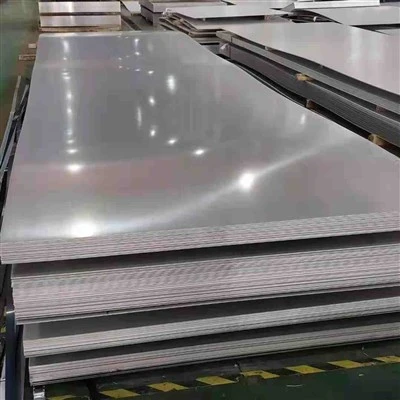
Industrial pure iron is a type of steel in which the primary chemical component is iron, with total impurities kept below 0.2% and carbon content typically ranging from 0.02% to 0.04%. In some high‑purity grades, carbon can be as low as 0.005%. Iron purity generally falls between 99.5% and 99.9%.
Because it is not 100% pure iron – traces of carbon and other elements remain – it is called industrial pure iron to distinguish it from chemically pure iron (electrolytic iron, which reaches 99.9%–99.99% purity).
Industrial pure iron is also known as ingot iron or Armco iron. It is produced via electric arc furnaces, oxygen converters, or converter plus secondary refining processes. The most advanced production method – electric arc or oxygen converter combined with ladle refining – can achieve carbon levels as low as 0.005% with extremely low phosphorus, sulfur, oxygen, nitrogen, and non‑metallic inclusions.
2. Key Characteristics
Industrial pure iron is valued for three main properties:
Excellent ductility – it is soft and highly formable, capable of being shaped into complex geometries without cracking.
Superior electromagnetic performance – high magnetic permeability, low coercivity, and stable magnetic properties with no magnetic aging.
High purity – low levels of carbon, sulfur, phosphorus, and other residual elements ensure consistent performance in downstream processes.
3. Standards Governing Industrial Pure Iron
Industrial pure iron is produced and classified under several national and international standards. The most important ones include:
| Standard | Title | Key Points |
|---|---|---|
| GB/T 6983-2022 | Electromagnetic Pure Iron | Covers DT series grades for electromagnetic applications; replaced GB/T 6983-2008 |
| GB/T 9971-2017 | Pure Iron Raw Material | Covers YT series grades used as melt stock for alloy production |
| ASTM A848-17 (2026) | Low-Carbon Magnetic Iron | International standard for wrought low‑carbon iron with carbon ≤0.015% |
| ASTM A1126-23 | Magnetic Pure Iron | Covers mill‑cast and wrought magnetic pure iron with carbon ≤0.0060% and typical iron ≥99.9% |
4. Grade Classification System
The DT Series (Electromagnetic Pure Iron)
The most widely recognized industrial pure iron grades in China are the DT series, governed by GB/T 6983. The letters "D" and "T" stand for the Chinese pinyin initials of "electric" (电) and "iron" (铁).
The numbering follows this logic:
DT + number (order number, generally indicating electromagnetic properties from lower to higher)
Optional suffix: A (advanced), E (extra), or C (super) – indicating magnetic performance level
The current DT series includes:
| Grade | Magnetic Level | Coercivity Hc (A/m) ≤ | Max Permeability μ (H/m×10⁻³) ≥ |
|---|---|---|---|
| DT4 | Regular | 96 | 0.0075 |
| DT4A | Advanced | 72 | 0.0088 |
| DT4E | Extra | 48 | 0.0113 |
| DT4C | Super | 32 | 0.0151 |
Data source
DT4C offers the lowest coercivity and highest permeability among the series, making it the preferred choice for demanding electromagnetic applications.
Note: Older grades DT3 and DT3A were eliminated in the GB/T 6983-2008 revision and are no longer current.
The YT Series (Raw Material / Melt Stock)
The YT series (e.g., YT0, YT01) is governed by GB/T 9971 and is used primarily as melt stock for producing precision alloys, superalloys, ultra‑low carbon stainless steel, and electrical heating alloys. These grades focus on chemical purity rather than magnetic performance and are typically supplied in billet or ingot form.
5. Common Applications
Industrial pure iron serves a wide range of industries:
Electromagnetic components – relay cores, solenoid armatures, electromagnetic switches, magnetic shielding
Electrical equipment – DC motor cores and housings, transformer components
Automotive – electrical parts and magnetic sensors
Aerospace and defense – instrument components and motor housings
Alloy production – raw material for precision alloys, high‑temperature alloys, and ultra‑low carbon stainless steel
Deep‑drawing applications – complex formed components requiring high ductility
Summary
Industrial pure iron is a high‑purity iron‑carbon alloy with iron content of 99.5%–99.9% and carbon typically below 0.04%. It is produced under strict standards – primarily GB/T 6983 for electromagnetic grades (DT series) and GB/T 9971 for raw material grades (YT series) – and is essential in electromagnetic, electrical, automotive, aerospace, and alloy production applications.