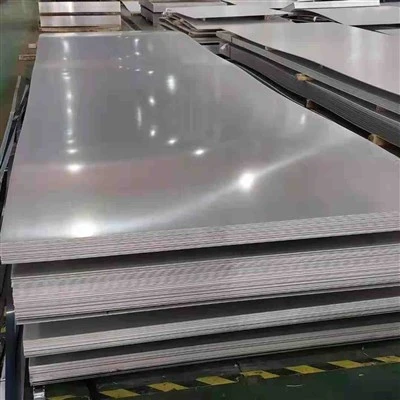
In the modern industrial system, foundries are an important pillar of the manufacturing industry, and their production efficiency and product quality are directly related to the operational efficiency and product quality of the entire industrial chain. And pure iron, this fundamental and unique metal material, plays a crucial role in the production process of foundries. It has not only become the preferred material for specific applications due to its excellent physical and chemical properties, but also brought immeasurable benefits to foundries with its outstanding performance and broad application prospects.
The high magnetic permeability of pure iron is one of its most prominent characteristics. This characteristic makes pure iron an ideal material for manufacturing electromagnetic equipment such as transformers and motors. In electromagnetic equipment, the high permeability of pure iron can significantly improve energy conversion efficiency, reduce energy loss, and thus lower the energy consumption and operating costs of the equipment. This is undoubtedly a huge blessing for today's society that pursues high efficiency and energy conservation.
In addition, the corrosion resistance and good processing performance of pure iron are also important reasons why it is highly favored. In industries such as chemical and food processing, equipment components need to withstand the erosion of various corrosive media, and the corrosion resistance of pure iron can effectively extend the service life of equipment, ensuring the continuity and stability of production. At the same time, pure iron also has good processing performance and is easy to perform cutting, welding, and other processing operations, providing convenience for manufacturing various complex shaped parts.
In the field of casting, the application of pure iron has demonstrated its unique advantages. Due to the high purity and uniform structure of pure iron, the cast parts have high dimensional accuracy and good surface quality, which can meet the production of components with extremely high requirements for material purity and precise dimensional control. This is of great significance for improving the quality and performance of products and enhancing the market competitiveness of enterprises.
More importantly, the application of pure iron has also driven the continuous innovation and development of casting technology. In order to meet the market demand for pure iron castings, foundries constantly explore and apply new technologies and processes. For example, using vacuum melting technology to improve the purity and uniformity of pure iron; Using computer-aided design and simulation technology to optimize mold design and reduce casting defects; Introducing additive manufacturing technologies such as 3D printing to achieve precise manufacturing of complex shaped parts. The application of these innovative technologies not only improves the performance and quality of pure iron castings, but also broadens their application scope, injecting new vitality into the high-quality development of the casting industry.
Meanwhile, the application of pure iron has also promoted green production and sustainable development in foundries. By recycling scrap steel and refining it before using it for casting, it not only saves resources but also reduces environmental pollution. This not only conforms to the current global advocacy for green and low-carbon development, but also provides strong support for foundries to achieve sustainable development.